
How to Find a Roof Leak (7 Easy Ways to Spot It Fast)
A small roof leak can cause major damage if left unchecked. Water can seep into insulation, drywall, and framing long before a visible stain appears. That’s why learning how to find a roof leak is a must for every homeowner. Whether you’re dealing with storm damage or an aging roof in Springfield and surrounding areas, early detection helps you act fast and avoid costly repairs. If you know where to look, even subtle signs can point to a problem — and the fix often starts with a thorough inspection after heavy rain.
- Why quick leak detection prevents bigger problems
- 7 simple ways to spot roof leaks fast
- Common causes and warning signs you might miss
- When to handle it yourself and when to call a pro
Why Leak Detection Shouldn’t Wait

A slow roof leak doesn’t always drip into a bucket — it often hides behind walls, above ceilings, or in insulation. Left alone, it can rot framing, grow mold, and ruin paint and finishes. Finding it early can save thousands.
- Prevents Structural Damage: Water weakens framing, joists, and roof decking over time.
- Avoids Mold and Mildew: Moisture buildup in insulation and drywall leads to hidden mold growth.
- Preserves Home Value: Stains, odors, and warped materials reduce resale potential.
- Protects Insulation Efficiency: Wet insulation loses effectiveness and can trap cold air or heat.
- Supports Warranty Claims: Some warranties require leaks to be reported quickly after discovery.
7 Easy Ways to Spot a Roof Leak
You don’t need to wait for water to drip from the ceiling. These simple techniques will help you identify leak sources — or at least narrow them down — before the damage spreads.
1. Look for Ceiling Stains or Discoloration
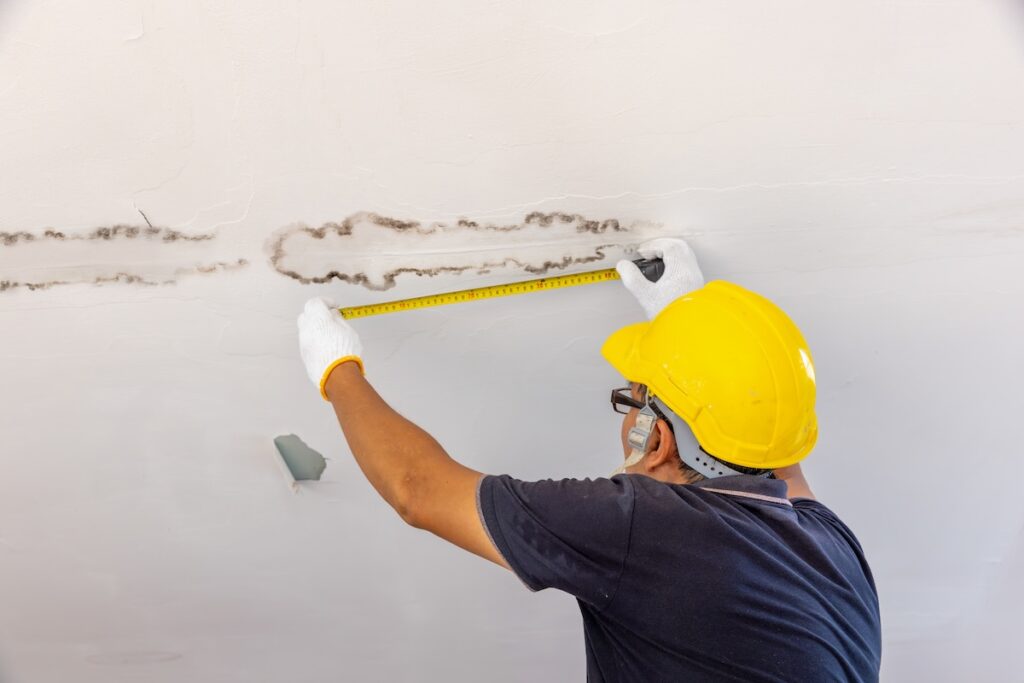
Brown or yellowish water spots are one of the most obvious signs of a roof leak. These often appear in the corners of rooms, along ceiling seams, or near lighting fixtures.
- Circular stains indicate long-term dripping
- New, darker patches may feel damp to the touch
- Inspect top-floor ceilings during or right after rainfall
Tip: If you notice bubbling paint or sagging drywall, the leak has likely been active for some time.
2. Check the Attic After Rain
The attic is often the first place to show signs of roof failure. Bring a flashlight and check thoroughly, especially after a heavy storm.
- Look for wet rafters, sheathing, or insulation
- Musty smells can signal trapped moisture
- Use caution walking on beams; avoid stepping on insulation or unsupported areas
Tip: Start your inspection at the roof valleys, around vents, and near chimneys — these are common leak zones.
3. Trace Water Trails on Interior Walls
Sometimes, a roof leak will run down inside walls before showing up elsewhere. Water can follow electrical wiring or framing and appear far from the actual leak.
- Check upper corners and tops of windows for peeling paint or bubbling
- Follow the stain upward — the leak origin is often higher than the visible damage
- Drywall that feels soft or spongy could be hiding wet insulation
Tip: Use a moisture meter to detect water in walls that show no surface stains yet.
4. Inspect Roof Penetrations and Flashing
Roof leaks almost always start where something interrupts the shingles — chimneys, skylights, plumbing vents, or dormers.
- Look for cracked or rusted flashing
- Inspect rubber boots around pipes for dry rot or splitting
- Check for missing sealant or gaps where flashing meets masonry or siding
Tip: Even if shingles look intact, compromised flashing can let water through in the smallest openings.
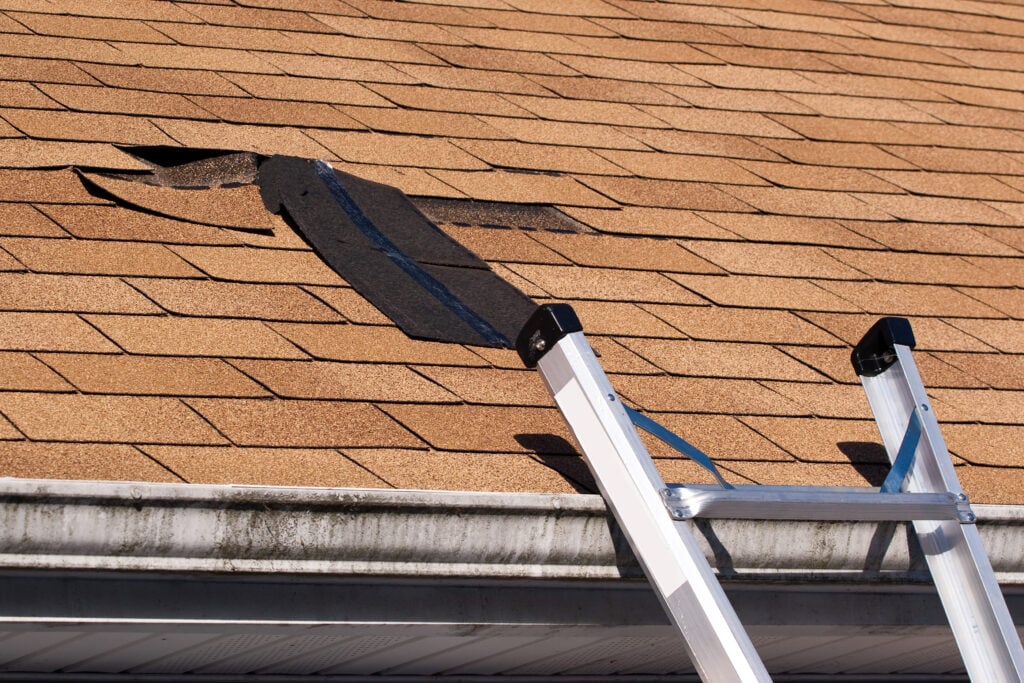
5. Look for Missing or Damaged Shingles
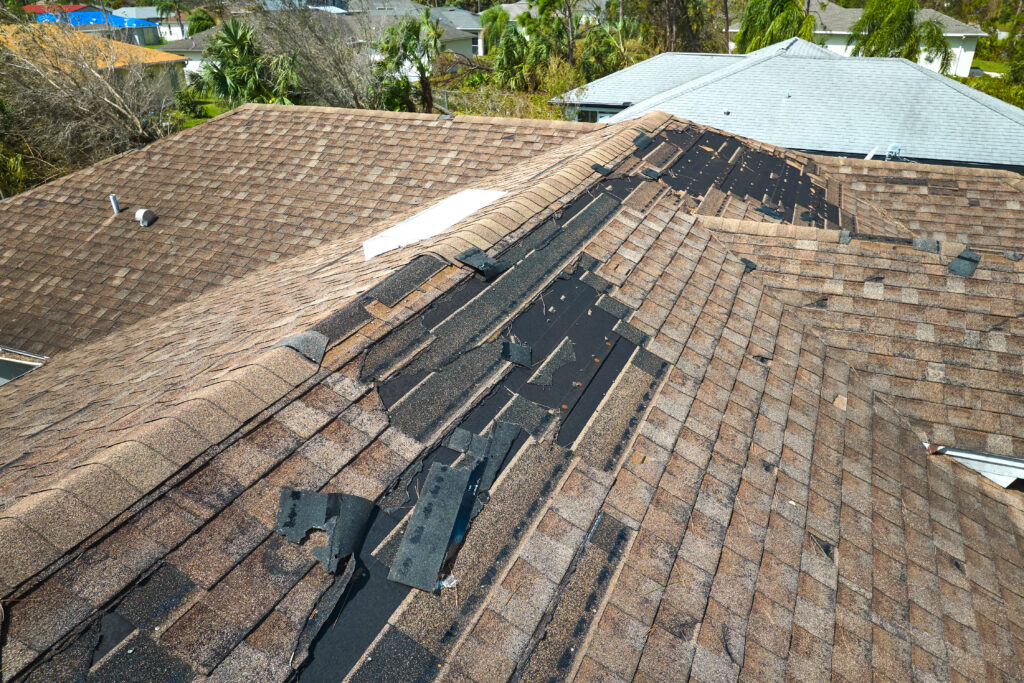
Strong winds, hail, and years of sun exposure can damage or dislodge shingles, creating openings for water intrusion.
- Stand back from the house and scan for color variations or irregular lines
- Check valleys and roof edges — they experience the most runoff
- Look for granule buildup in gutters or at downspouts (a sign of aging shingles)
Tip: Use binoculars or a drone to inspect without climbing, or have a contractor do a walkable roof inspection.
6. Examine the Gutters and Downspouts
Clogged or misaligned gutters can cause water to pool at the roof’s edge, forcing it under shingles and into the fascia.
- Ensure gutters are free of leaves and debris
- Watch for rust stains, sagging sections, or visible gaps
- Make sure downspouts direct water away from the foundation
Tip: Ice dams in winter are often linked to inadequate gutter drainage and ventilation.
7. Spray Test Suspect Areas (Carefully)
If you suspect a leak but can’t find it, a controlled spray test can help. With someone in the attic, use a garden hose to wet small sections of the roof while watching for drips inside.
- Start at the bottom and work your way up
- Test one area at a time, waiting a few minutes before moving on
- Have two people communicate via phone or walkie-talkie
Tip: Don’t use a pressure washer or stand on steep sections — safety first.
Other Signs You Might Have a Roof Leak
In some cases, leak symptoms are subtle but still serious. Keep an eye out for these clues:
- Mold on exterior walls: Often due to water entering behind siding from bad flashing
- Curling shingles: Indicate moisture trapped beneath the surface
- Nail pops in the attic: May signal shifting or water damage to roof decking
- Water around light fixtures: Never ignore this — it can pose an electrical hazard
- Peeling paint or wallpaper: Caused by trapped moisture between walls and surfaces
Leaks can also affect multiple areas at once, especially after hailstorms or long periods of rain.
Common Leak Causes and Where to Find Them
Leaks don’t always occur in the same spots. Here’s a breakdown of where and why roof leaks tend to happen:
| Leak Location | Common Cause |
| Valleys | Worn underlayment, cracked sealant |
| Chimney flashing | Loose or rusted flashing, bad caulking |
| Skylights | Improper installation, failed seals |
| Roof vents | Cracked boots or missing flashing |
| Roof edges | Wind-blown rain, ice dams, poor drip edge |
| Dormers and wall joints | Flashing gaps, siding leaks |
| Ridge caps | Improper nailing, wind damage |
What to Do If You Find a Roof Leak
Once you’ve identified a leak or its signs, don’t wait. Moisture spreads quickly — and the sooner you act, the easier the fix.
Short-Term Fixes
- Place buckets or pans to catch dripping water
- Puncture bulging ceiling bubbles to release water safely
- Use roofing tape or tarps on exposed roof sections (temporary)
Long-Term Solutions
- Schedule a professional inspection for full diagnosis
- Replace damaged flashing, shingles, or underlayment as needed
- Upgrade attic ventilation to prevent future condensation issues
Tip: If the leak is caused by storm damage, document everything with photos and contact your insurer quickly.
Stop That Leak Before It Spreads
Roof leaks rarely fix themselves. What starts as a trickle can quickly become a major repair if ignored — especially during heavy rainfall or snowmelt. By learning how to find a roof leak and acting quickly, you can avoid costly interior damage and preserve your roof’s lifespan. For expert leak detection and timely repair service in Springfield and surrounding areas, contact us today to schedule an inspection with All Team Exteriors.





All Together. All Protected. All Team
Get Started Today
"*" indicates required fields